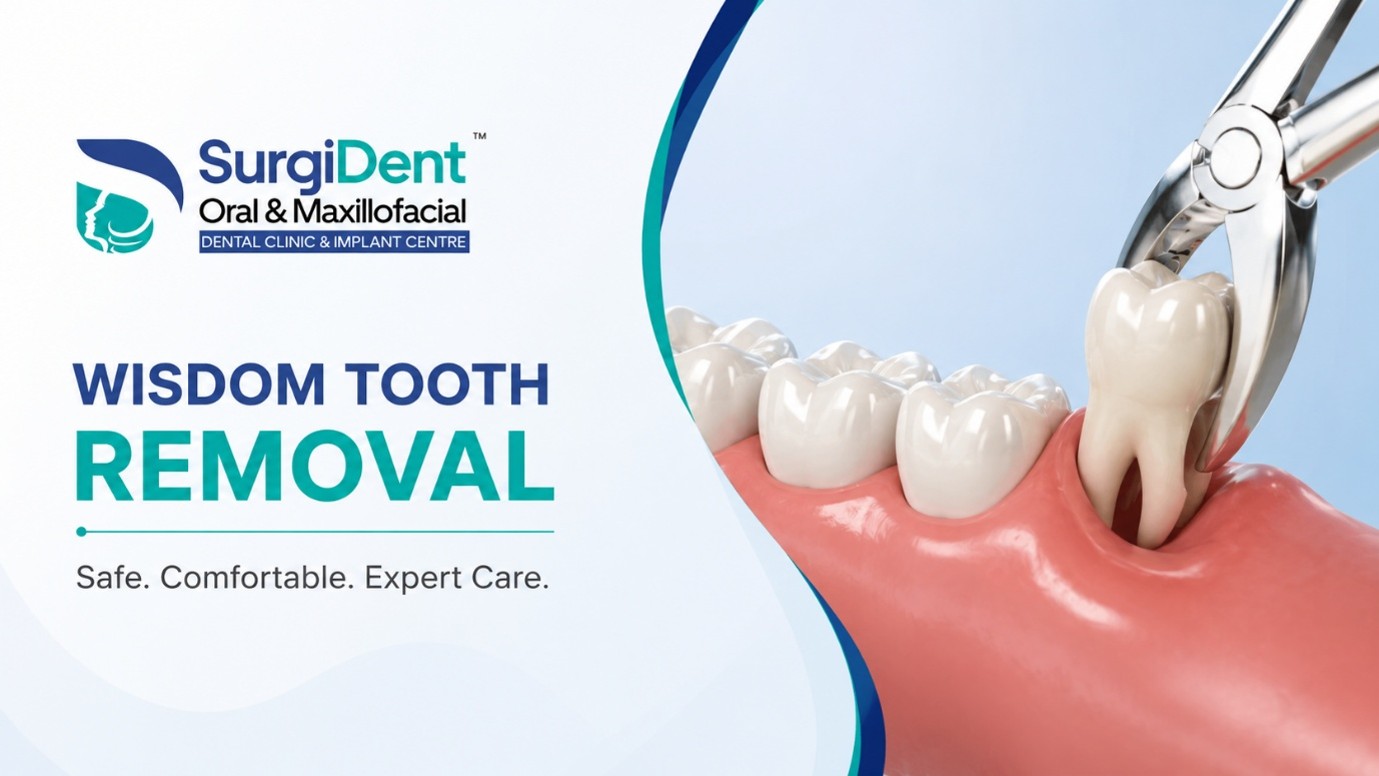
Is Wisdom Tooth Surgery Painful? What to Expect Before, During & After Extraction
Worried About Wisdom Tooth Surgery? Here's the Truth.
One of the most common concerns patients have before wisdom tooth removal is:
"Will wisdom tooth surgery be painful?"
The good news is that wisdom tooth surgery itself is usually not painful because it is performed under effective local anesthesia. Most patients feel pressure and movement during the procedure, but they should not feel sharp pain.
At SurgiDent Oral & Maxillofacial Clinic, we perform wisdom tooth surgeries regularly for patients from Garfa, Jadavpur, Santoshpur, Kasba, Dhakuria, Jodhpur Park, Kalikapur, Haltu, Mukundapur, Ruby, and across South Kolkata, ensuring a comfortable and stress-free experience.
Why Do Wisdom Teeth Cause Problems?
Wisdom teeth, also known as third molars, are the last teeth to erupt, usually between the ages of 17 and 25.
Often, there isn't enough space in the jaw for them to erupt properly, leading to:
- Impacted wisdom teeth
- Pain and swelling
- Food trapping
- Gum infections
- Tooth decay
- Damage to neighboring teeth
- Jaw discomfort
- Recurrent infections
In many cases, surgical removal is recommended to prevent future complications.
Is Wisdom Tooth Surgery Painful During the Procedure?
The Short Answer: No
Before the procedure begins, the area is thoroughly numbed using local anesthesia.
Once the tooth and surrounding tissues are anesthetized, you may feel:
The tooth and surrounding area are completely numbed, ensuring a comfortable procedure.
- Pressure
- Gentle pushing or pulling sensations
- Vibrations from dental instruments
But you should not feel sharp pain.
If you feel discomfort at any point, additional anesthesia can be administered immediately.
What Happens During Wisdom Tooth Surgery?
Step 1: Clinical Examination and X-rays
Your oral surgeon evaluates the position of the wisdom tooth using clinical examination and radiographs.
Step 2: Local Anesthesia
The surgical area is completely numbed.
Step 3: Tooth Removal
If the tooth is impacted, a small incision may be made in the gum and, when necessary, the tooth may be sectioned into smaller pieces for easier removal.
Step 4: Cleaning the Area
The extraction site is cleaned thoroughly to remove debris and infected tissue.
Step 5: Sutures
In many cases, stitches are placed to promote healing.
Is There Pain After Wisdom Tooth Surgery?
Some discomfort after surgery is normal and expected.
Most patients experience:
- Mild to moderate soreness
- Swelling of the cheek
- Jaw stiffness
- Difficulty opening the mouth fully for a few days
These symptoms are usually well-controlled with prescribed medications and proper post-operative care.
The discomfort after surgery is generally much less than the pain caused by a chronically infected wisdom tooth.
How Long Does Recovery Take?
First 24 Hours
- Mild bleeding may occur
- Swelling begins
- Rest is recommended
Days 2–3
- Swelling usually reaches its peak
- Mild discomfort may persist
Days 4–7
- Swelling gradually reduces
- Normal activities can usually be resumed
1–2 Weeks
- Most patients recover comfortably
- Soft tissue healing progresses significantly
Tips for a Comfortable Recovery
Follow Medication Instructions
Take prescribed medications exactly as directed.
Apply Cold Compresses
Ice packs during the first 24 hours help reduce swelling.
Eat Soft Foods
Choose foods such as:
- Yogurt
- Khichdi
- Soup
- Smoothies
- Mashed potatoes
Avoid Smoking and Tobacco
Smoking significantly increases the risk of complications and delayed healing.
Maintain Oral Hygiene
Follow your surgeon's instructions regarding mouth rinsing and brushing.
Signs You Should Contact Your Oral Surgeon
Seek professional advice if you experience:
- Severe pain not relieved by medication
- Excessive bleeding
- Fever
- Increasing swelling after several days
- Difficulty swallowing
- Persistent bad taste or pus discharge
Prompt evaluation helps prevent complications and promotes faster recovery.
Does Every Wisdom Tooth Need Surgery?
Not necessarily.
Wisdom teeth that are healthy, fully erupted, and easy to clean may not require removal.
However, surgery is often recommended when wisdom teeth are:
- Impacted
- Causing pain
- Repeatedly infected
- Damaging adjacent teeth
- Associated with cysts or bone loss
A thorough examination helps determine the best course of action.
Why Choose an Oral & Maxillofacial Surgeon for Wisdom Tooth Removal?
Complex wisdom tooth extractions require specialized training.
An Oral & Maxillofacial Surgeon is trained to manage:
- Deeply impacted teeth
- Teeth close to important nerves
- Jaw-related complications
- Surgical extractions
- Complex oral surgical procedures
Choosing an experienced surgeon can make the procedure safer, more predictable, and more comfortable.
Looking for Wisdom Tooth Surgery in Garfa, Jadavpur, or South Kolkata?
At SurgiDent Oral & Maxillofacial Clinic, we provide expert wisdom tooth removal using modern surgical techniques focused on patient comfort and safety.
Our goal is to make wisdom tooth surgery as comfortable and stress-free as possible while ensuring a smooth recovery.
Frequently Asked Questions
Find answers to common questions about wisdom tooth surgery
Book Your Wisdom Tooth Consultation at SurgiDent
If you're experiencing wisdom tooth pain, swelling, infection, or food trapping, early evaluation can prevent more serious problems. Schedule a consultation at SurgiDent Oral & Maxillofacial Clinic and receive expert care from an experienced oral surgery team.